
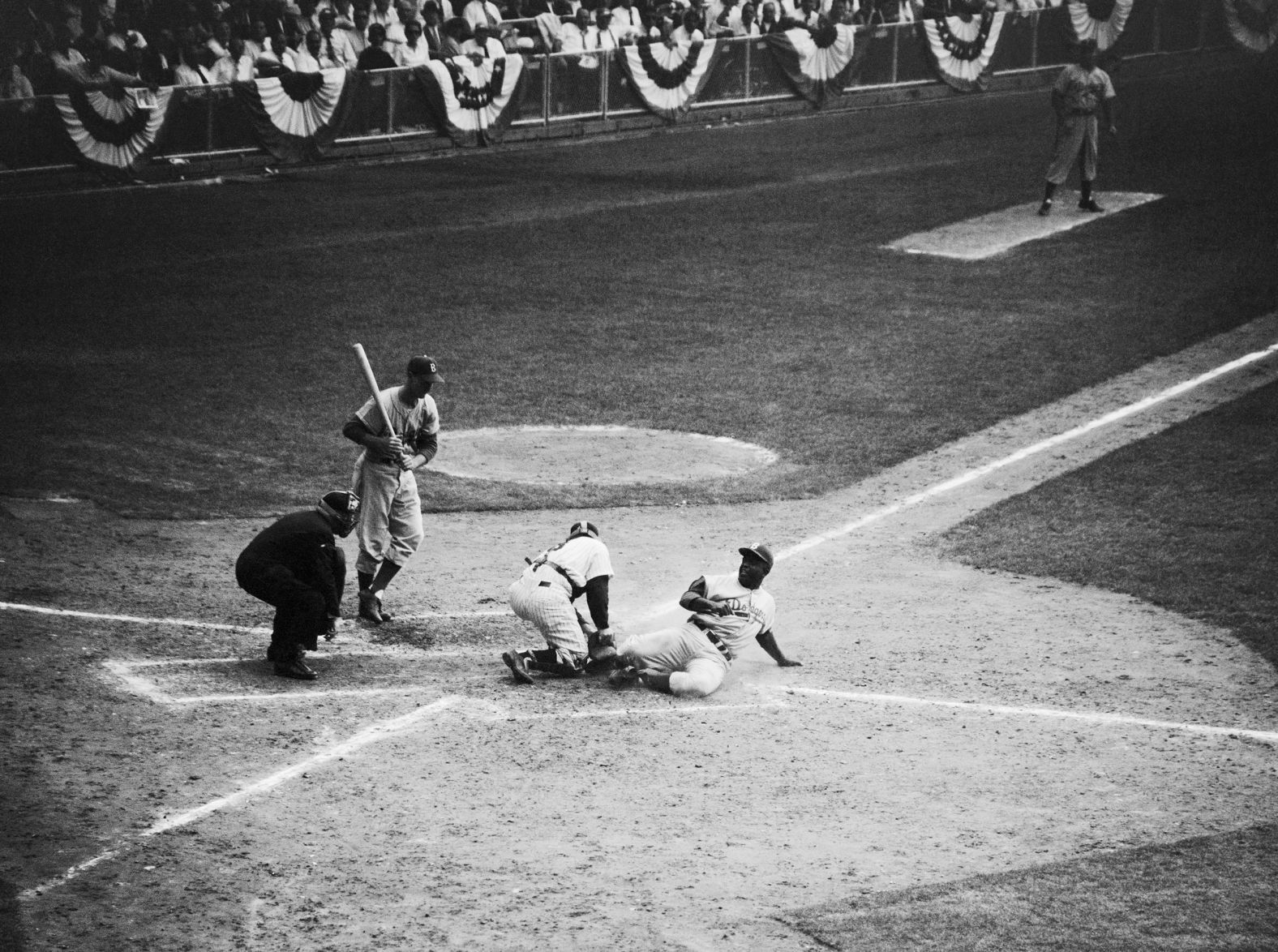
Every year, on April 15, baseball fans worldwide come together to commemorate Jackie Robinson Day, which holds profound significance in the annals of sports history. This day marks the anniversary of Jackie Robinson’s debut in Major League Baseball (MLB) in 1947 when he broke the color barrier and forever changed the landscape of professional sports. As we reflect on Robinson’s remarkable legacy, we celebrate his athletic prowess and his enduring impact on civil rights and social justice.
Born on January 31, 1919, in Cairo, Georgia, Robinson grew up in a time of racial segregation and discrimination. Despite facing numerous obstacles, he excelled in multiple sports, demonstrating his exceptional talent and determination from a young age. After serving in the U.S. Army during World War II, Robinson’s path intersected with that of Branch Rickey, the president and general manager of the Brooklyn Dodgers.
Recognizing Robinson’s exceptional abilities and unwavering character, Rickey signed him to the Dodgers organization to break baseball’s color barrier. On April 15, 1947, Robinson made history when he stepped onto the field at Ebbets Field, becoming the first African American to play in the MLB’s modern era. This courageous act paved the way for generations of athletes of all backgrounds to pursue their dreams without fear of racial discrimination.
Robinson’s rookie season was marked by adversity as he faced racial taunts, threats, and discrimination both on and off the field. However, he refused to be intimidated, responding with grace, dignity, and outstanding performance. His resilience and determination earned him the respect of his teammates and fans and helped catalyze a shift in societal attitudes towards racial equality.
Beyond his athletic achievements, Robinson was a trailblazer in the fight for civil rights. He used his platform to speak out against segregation and injustice, becoming a prominent figure in the broader struggle for racial equality. Robinson’s influence extended far beyond the realm of sports, as he worked alongside civil rights leaders such as Martin Luther King Jr. and Malcolm X to advance the cause of social justice.
Robinson’s impact on civil rights and social progress cannot be overstated. His courage and perseverance inspired countless individuals to challenge discrimination and strive for equality in all aspects of life. In 1947, he was not just playing baseball but breaking down barriers and opening doors for future generations.
In addition to his activism, Robinson was also a dedicated philanthropist and community leader. He established the Jackie Robinson Foundation in 1973, which provides scholarships and support to minority students, empowering them to pursue higher education and achieve their goals. Robinson’s legacy continues to uplift and inspire communities across the country through his foundation and other charitable endeavors.
As we commemorate Jackie Robinson Day, we honor his athletic achievements and his enduring legacy as a pioneer in civil rights and social justice. Robinson’s courage, integrity and unwavering commitment to equality serve as a timeless reminder of the power of one individual to effect positive change in the world.
On this Jackie Robinson Day, let us celebrate the life and legacy of a true American hero. Let us reflect on our progress and recommit ourselves to the ongoing struggle for equality and justice for all. In the words of Jackie Robinson himself, “A life is not important except in the impact it has on other lives.” Robinson’s impact continues to resonate, inspiring us to build a more inclusive and equitable society for future generations.
Main Image Credit: Jackie Robinson steals home during Game 1 of the 1955 World Series. The Dodgers lost the game but went on to defeat the New York Yankees in seven games. Bettmann Archive/Getty Images



Leave a Reply